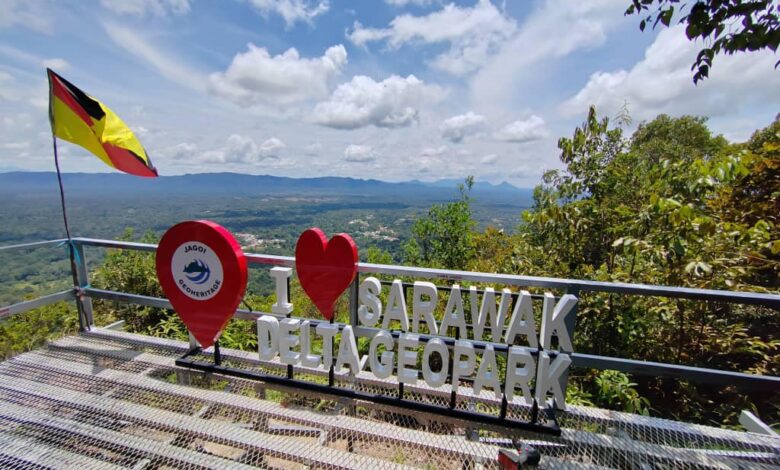
Sarawak has just achieved a monumental milestone as the Sarawak Delta Geopark has officially been elevated to a UNESCO Global Geopark.
The confirmation of the recognition was made on April 23, 2026, while the certificate to confirm such recognition is scheduled to done today, 27 April 2026.
This prestigious certification places Sarawak firmly on the map as a premier destination for sustainable and experiential travel.
This historic recognition officially makes the Sarawak Delta the fourth UNESCO Geopark in Malaysia, and the second of its kind in Malaysia-Borneo after Kinabalu UNESCO Global Geopark.
A New Era for Kuching Tourism
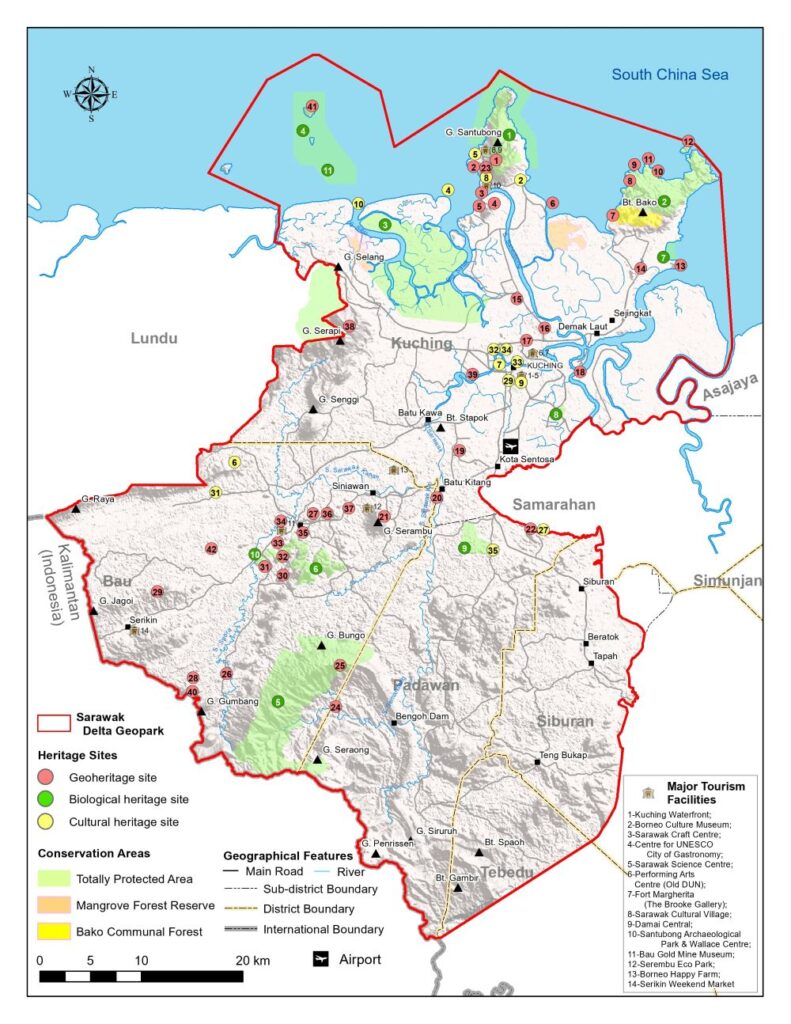
Covering over 3,112 square kilometers across Kuching, Bau, Padawan, and Siburan, the geopark offers a rare convergence of geological marvels and vibrant community heritage.

The status acts as a major catalyst for the local economy as it purposefully shifts the focus toward community-driven eco-tourism, encouraging green initiatives while fiercely preserving our majestic rainforests from exploitation.
That said the Geopark serves as a breathtaking open-air museum enabling one to explore fossil-rich zones, marvel at the mystical Wind and Fairy Caves in Bau, and navigate intricate river systems weaving through lush mangrove forests.
If coupled with specialized tourism packages that focus on adventure, biodiversity, and community-based cultural experiences – such as authentic longhouse stays and wildlife encounters at Semenggoh – the UNESCO label promises world-class, responsible tourism right in our own backyard.
With the offcial recognition of the Sarawak Delta Geopark, Sarawak now boast four UNESCO sites namely Gunung Mulu National Park and Niah National Park, both marked as UNESCO World Heritage Sites, and Kuching being designated as a UNESCO Creative City of Gastronomy.
About the Sarawak Delta Geopark
The Sarawak Delta Geopark boasts a legacy that spans millions of years of geological formation and centuries of cultural heritage.
Historically, its intricate network of river systems, extensive mangrove forests, and striking limestone karsts served as vital natural fortresses and trading channels for indigenous communities like the Iban, Bidayuh, and Malays.
This pristine ecosystem fostered an early hub of regional commerce and sustenance, shaping the area’s socioeconomic backbone long before modern development.
Initiated in 2009, dedicated conservation efforts have tirelessly worked to protect these ancient landscapes and historical trade routes, perfectly preserving the delta’s majestic past.
Information source: BorneoPost, SDGp, UNESCO